Apr
21
2017
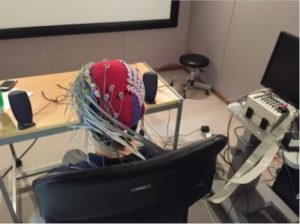 Two recent neuroscience news items in The Independent represent exactly the problem with bad science journalism today and the tendency to overhype incremental studies.
Brain-Machine Interface
Here’s the first:
Device that can literally read your mind invented by scientists. An ‘easily operated’ machine linked to a smartphone could be ready within five years.
Um, no. I have be writing about this technology for years, because it is genuinely interesting and I think is a technology to watch. Several labs have made significant progress in brain-machine interfaces. The idea is that you read the electrical activity of the brain with either scalp electrodes or brain surface electrodes. Scientists have developed software that interprets the EEG patterns and learns to correlate them with the thoughts or intentions of the subject. The subject, in turn, learns to control their mental activity to affect the EEG output.
Here is where the technology stands: With brain surface electrodes, you get a much greater resolution of EEG activity. The software has progressed to the point that monkeys can control a robotic arm with sufficient subtlety to feed themselves.
With humans we have mostly used scalp electrodes, which have a more blurry signal. Even with these people have learned to control robots or control a cursor on a computer.
Continue Reading »
Jun
09
2015
 Charles Lieber with his team at Harvard University have developed a flexible mesh network of electrodes that can be injected through the skull, unfolding onto the surface of the brain. This technology could be a significant advance in our ability to study the brain.
Neuroscientists are trying to map the brain in as much detail as possible, creating what is being called the “connectome” (reminiscent of mapping the human “genome”).
There are about 87 billion neurons in the adult human brain. Each neuron is capable of making up to around 10,000 connections to other neurons, which means the total connections in the brain is somewhere around a quadrillion. The saying goes that neurons that wire together fire together, so the pattern of connections determines the pattern of electrical activity in the brain.
Continue Reading »
Apr
01
2013
We are seeing the beginning of technology to interface computers and brains. I have been writing about brain-machine-interface (BMI) technology, and brain-machine-brain interface technology. Now we have a report of brain to brain communication, which is currently as close as we can come to telepathy.
Actually, the technology is – brain to machine to another machine and then to another brain – technology. Imagine having a computer chip implanted in your brain that can read your brain activity. This information is then transferred to a computer chip implanted in someone else’s brain, who can then access that information.
If this exchange were happening in real time through wireless transfer with sufficient resolution, that would essentially be telepathy.
Continue Reading »
Oct
06
2011
It’s just a matter of time. The cyborg revolution is coming (although I won’t dare to make specific predictions about the timeline).
All the necessary basic principles have been demonstrated. We can train animals and people to operate either a robotic or virtual actuator with their thoughts alone. We can trick the brain into occupying a virtual body or “owning” an artificial limb. And now we can even provide specific sensory feedback directly to the brain – so called Brain-Machine-Brain-Interface (BMBI – I wonder if the researchers are calling it “Bambi”).
Just published in Nature Magazine is research involving rhesus monkeys that were taught to control a virtual arm with their thoughts alone. This much has been done before – various research teams are working on this technology, either involving implantable electrodes or surface electrodes. The new research, however, adds a new dimension – providing sensory feedback to the monkeys.
Continue Reading »
Jul
23
2009
I have written previously about the various attempts to reverse engineer the brain and to develop artificial intelligence (AI). This is an exciting area of research. On the one hand researchers are trying to model the working of a mammalian brain, eventually a human brain, down to the tiniest detail. On the other, researchers are also trying to build an AI – either in hardware or virtually in software.
In the middle are attempts at interfacing brains and computer chips. Remember the monkeys who can move robot arms with their minds?
All these efforts are synergistic – modeling the mammalian brain will help AI researchers build their AI, and building AI computers and applications can teach us about brain function. The more we learn about both, the easier it will be to interface them.
Continue Reading »
Aug
14
2008
I enjoy science fiction partly because it can be a thought experiment on the potential course of future technology. A common sci-fi theme is the merging of man and machine and the blurring of distinction between the two. Clearly this is a process that has already begun, but even the most thoughtful futurists cannot tell where this will lead with anything but the broadest brush strokes.
In the campy sci-fi flick Saturn 3 (1980), the character played by Harvey Keitel builds a robot (Hector) with a modified human brain as it’s CPU. Keitel trains the robot partly by imprinting his own brain patterns onto it. As he is a dangerous criminal psychotic, antics ensue.
The prequels to the classic Dune series, written by Frank Herbert’s son, Brian, along with Kevin J Anderson, the primary enemies of humanity are cymeks – immortal human brains that can inhabit their choice of robotic bodies – from battle armor to space ships.
In 2061: Odyssey Three, Arthur C Clarke paints a future where every human is equipped in infancy with a “brain cap.” This is a super-computer that fits nicely over the skull, sending electrodes down into the brain in order to seamlessly interface with it and greatly expand human intellectual capacity.
In Stephen R. Donaldson: The Gap Series (1990-94), a major plot element is the “zone implant.” This is a computer device implanted into the human brain in order to enhance and control its function. They are outlawed because of they offer complete control to whoever holds the remote control to someone’s implant. But they are also portrayed as useful for the treatment of psychological and neurological disorders.
And, of course, in the new Battlestar Galactica series (I highly recommend this series to any sci-fi fan, and even if you are not a sci-fi fan this is simply superb drama) the Cylons have created humanoid robots that are indistinguishable from normal humans but have Cylon AI.
This is just a sampling running the spectrum from brains controlling robots to AI controlling human bodies with brain-AI interfaces in between. At present we are just taking the first baby steps toward whatever version of these fictional futures await us, if any. Time will tell.
Continue Reading »
Aug
29
2007
Reader Blake Stacey asked me to comment on this article about the development of new antidepressants. It is a very interesting development in the pursuit of more effective and selective antidepressants and reveals a great deal about the state of this neuroscience.
For background, current pharmacotherapy for many neurological disorders, including mood disorders like depression, focus on altering the activity of neurotransmitters – the chemical signals by which neurons communicate with each other. Some of the more important neurotransmitters include dopamine, serotonin, norepinephrine, GABA, and glutamate. As we would expect from a messy evolved system, these neurotransmitters are used in various parts of the brain for different purposes. There is a great deal of overlap – the same neurotransmitter may be used by several different subsystems in the brain.
Neurotransmitters carry their signal by binding to a receptor. So neuron 1 will secrete dopamine, for example, which will then cross the synapse to neuron 2 where it will bind to dopamine receptors which in turn then trigger neuron 2 to fire at some frequency. To make things more complex there are several types of dopamine (and other) receptors. These receptor subtypes may have different effects in the same synapse, or may exist in different concentrations in different parts of the brain.
Continue Reading »
Mar
06
2012
Science fiction is full of a future in which we plug our brains into a computer (or a computer into our brains, I guess) and experience a seamless connection to either a virtual world (ala The Matrix) or a robotic machine that we can control as if it were a part of our body. This is called a brain machine interface (BMI), and the applications of this technology would be many and profound.
The question remains, however – will it work? Will the experience be truly seamless? Can our brains adapt to mesh with a virtual reality or control something external? There are two ways you can think about this based upon our current understanding of neuroscience. The first is that BMI will be inherently limited because as the brain develops it adapts to our bodies and the sensory information that it receives. There are also windows of developmental potential, and after our brains develop to a certain point it loses some of its potential to adapt and wire itself to novel input.
We might hypothesize, therefore, that an adult would have a limited capacity to adapt to a BMI. Therefore the experience will seem unnatural and perhaps even unpleasant, and the level of control will be limited and awkward. This is the pessimistic view.
Continue Reading »
Jan
30
2024
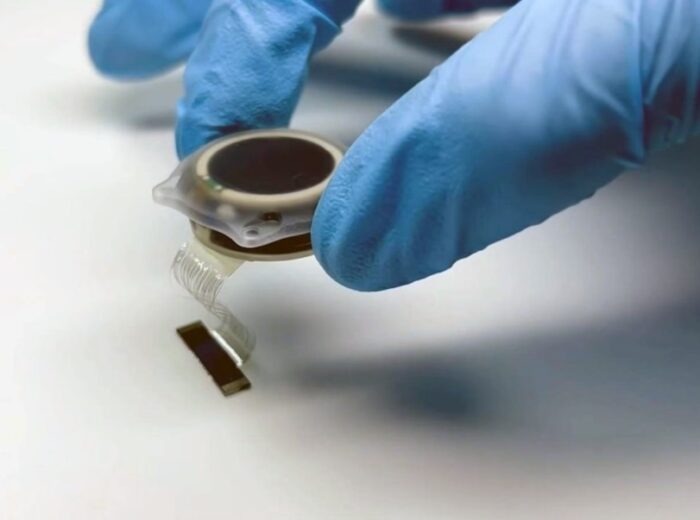 Elon Musk has announced that his company, Neuralink, has implanted their first wireless computer chip into a human. The chip, which they plan on calling Telepathy (not sure how I feel about that) connects with 64 thin hair-like electrodes, is battery powered and can be recharged remotely. This is exciting news, but of course needs to be put into context. First, let’s get the Musk thing out of the way.
Because this is Elon Musk the achievement gets more attention than it probably deserves, but also more criticism. It gets wrapped up in the Musk debate – is he a genuine innovator, or just an exploiter and showman? I think the truth is a little bit of both. Yes, the technologies he is famous for advancing (EVs, reusable rockets, digging tunnels, and now brain-machine interface) all existed before him (at least potentially) and were advancing without him. But he did more than just gobble up existing companies or people and slap his brand on it (as his harshest critics claim). Especially with Tesla and SpaceX, he invested his own fortune and provided a specific vision which pushed these companies through to successful products, and very likely advanced their respective industries considerably.
What about Neuralink and BMI (brain-machine interface) technology? I think Musk’s impact in this industry is much less than with EVs and reusable rockets. But he is increasing the profile of the industry, providing funding for research and development, and perhaps increasing the competition. In the end I think Neuralink will have a more modest, but perhaps not negligible, impact on bringing BMI applications to the world. I think it will end up being a net positive, and anything that accelerates this technology is a good thing.
Continue Reading »
Jul
24
2023
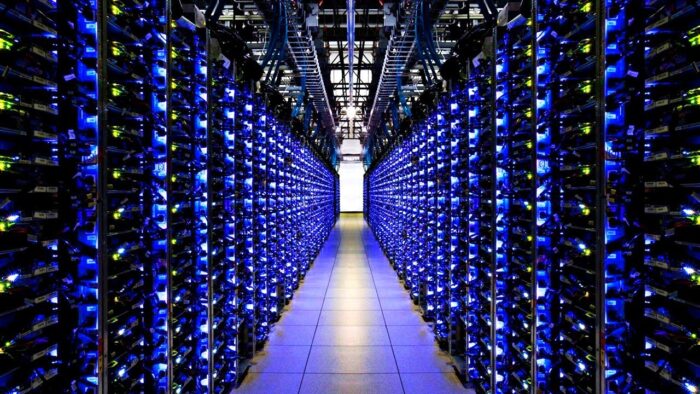 An analysis in 2021 found that 10% of the world’s electricity production is used by computers, including personal use, data centers, the internet and communication centers. The same analysis projected that this was likely to increase to 20% by 2025. This may have been an underestimate because it did not factor in the recent explosion of AI and large language models. Just training a large language model can cost $4-5 million and expend a lot of energy.
I am not trying to doomsay these statistics. Civilization gets a lot of useful work out of all this computing power, and it likely displaces much less efficient ways of doing things. One Zoom meeting vs an in-person meeting can be a huge energy savings. In fact, as long as we use all that computing power reasonably, it’s all good. We can talk about the utility of specific applications, like mining Bitcoins, but overall the dramatic advance of computing is a good thing. But it does shift our energy use, and it does represent the electrification of some technology. We therefore have to factor it in when extrapolating our future electricity uses (just like we need to consider the effect of shifting our car fleet from burning gasoline to using electricity).
The situation also presents an opportunity. As more and more of our energy use is shifted to computers as our world becomes more digital, that means we can have increasing improvement in our overall energy efficiency just by targeting one technology. For example, if computers used 20% of the world’s electricity, a 50% improvement in computer efficiency would result in a 10% drop in our energy demand (once fully implemented). Obviously such improvements would be implemented over years, but it points out how high the stakes are becoming for computer power efficiency. This means the industry needs to focus not just on doing things bigger, better, faster, but also more efficiently. We also need to think twice before adopting wasteful practices.
Continue Reading »