Jun 12 2018
Anti-GMO Lying

The anti-GMO site, Independent Science News, declares in a June 3rd headline: “GMO Golden Rice Offers No Nutritional Benefits Says FDA.” The problem with that headline is that it’s a lie. The FDA was forced to write a response stating that the claim is “misleading.”
Yeah – it’s deliberately misleading by distorting the facts and presenting them out of context so that they lead to a conclusion which is untrue. That is a form of lying.
Often I am asked how to sort science from fiction when there are many sides all loudly proclaiming opposing claims and citing their own evidence. (Gratuitous plug – for a thorough answer to this question, you can preorder my upcoming book.) One good way is to take any specific argument and follow the evidence as far as you can. Try to get back to primary sources, and see what they actually say. Follow the arguments back and forth, and see which side tends to have the final word.
Typically the side with the weaker position, or the one that is more ideological and less science-based, will display common characteristic behaviors. They will misrepresent primary sources – say, by citing a study to support a claim, when it doesn’t, or blatantly misrepresenting what the study shows. They will also cherry pick evidence, ignoring solid evidence that seems to contradict their position. When firmly challenged on one point, they may simply shift over to a separate point, without ever responding to or acknowledging the challenge. And – they will lie.
 A recent
  A recent study
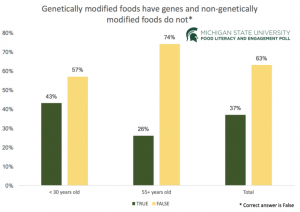 Increasingly in modern society, with perpetual access to the internet, lack of information is far less of a problem than misleading or incorrect information.
 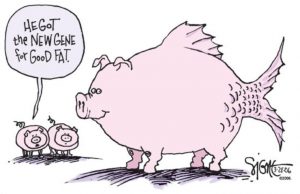 Genetically Modified Organisms (GMOs) remain the one issue on which there is the
  Stories take on a life of their own. That is the origin of urban legends, myths, and even religion. A good narrative feeds on itself and can be self-sustaining. It evolves and adapts and finds fertile ground in most human hosts (unless they have been inoculated with a sufficient dedication to facts and logic).
 Last week I wrote a response to a
 It is unfortunate that so many journalists begin with a narrative and then back fill the facts and points necessary to tell their narrative. I have encountered this many times when being interviewed for an article or documentary – more often than not the reporter or producer is simply hunting for quotes to plug into a story they have already written. I am not giving them information so much as filling a role, which could be that of expert or of token skeptic.
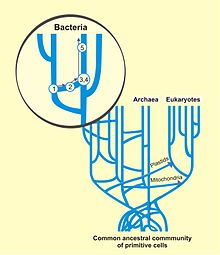 People reject genetically modified organisms