May
04
2026
 I came across a few news items that I could possibly write about today and couldn’t decide which to cover, so I will write about all of them, since they all relate to renewable energy. The first is a new study comparing direct air capture (DAC) to installing new wind and solar. This is a direct comparison between these two options, to see which provides the most bang for the buck.
DAC involves taking CO2 directly out of the atmosphere in order to mitigate carbon release through burning fossil fuels. If this technology were sufficiently efficient it could be hugely useful in reducing future climate change. This is the only approach that can potentially have a negative carbon footprint, actually reducing the amount of CO2 in the atmosphere. Other technologies simply reduce the amount released. This negative carbon factor is highly attractive since it could theoretically zero out our carbon release and even take us back in time to an atmosphere with less CO2. Right now, it should be noted, we are not only continuing to release massive amounts of CO2 into the atmosphere, the amount continues to increase. In 2025 the world emitted 38.1 billion tonnes, of carbon, a 1.1% increase over 2024.
But there are problems with DAC – it is currently not very efficient and is not scalable enough to have enough of an impact. Also, the efficiency of DAC depends heavily on how you power it – if you connect it to the grid and there is some fossil fuel energy on that grid, you may actually increase CO2 rather than decreasing it. Ideally DAC would be powered entirely by low carbon energy sources. This is why critics of DAC argue that it simply makes no sense to deploy this technology before we have decarbonized the energy sector, which we should do first.
Continue Reading »
Apr
30
2026
 I thought everyone needed one more thing to worry about, so here you go: evolving AI. When I hear this phrase I think of two things. The first are AI systems designed to simulate organic evolution. The second are artificially intelligent systems that are capable of evolving themselves. That latter one is the type you need to worry about.
Systems that simulate evolution already exist – Avida, Biogenesis, Grovolve, Tierra, Framsticks: and others. They basically have some code that competes for some resource or to complete some task and the code randomly mutates and reproduces. That’s it, all you need for an evolution simulation. Code can compete for computer resources, or be a physics simulator with digital creature trying to move quickly across terrain. These are sometime gamified for entertainment, but are also used for serious research, to study patterns within evolutionary systems. I would love to see these kinds of systems get more and more sophisticated, even to the point of reasonably simulating living systems. Such systems could be used to test hypotheses about evolution – and would also disprove a lot of silly creationist talking points.
But now we are talking about evolvable AI – AI systems that are capable of developing themselves through evolutionary processes. A new paper in PNAS discusses the potential power and risks of such systems. They echo they kinds of issues that have been explored in science fiction for decades. The authors write: “Evolvable AI (eAI), i.e., AI systems whose components, learning rules, and deployment conditions can themselves undergo Darwinian evolution, may soon emerge from current trends in generative, agentic, and embodied AI.” The results, they argue, have not been adequately addressed when discussing the potential risks of rapidly developing AI ability.
The authors distinguish two types of evolving AI – breeder systems and ecological systems. In breeder scenarios the programmers are in control of the process, selecting which code to “breed” and evaluating the outcome. This process is like a digital version of domestication, and has the potential, if done wisely, to maintain control. In fact, systems can be bred to have greater predictability and control. There are still risks here. So far humanity has not bred an animal to be more intelligent than humans. This could theoretically happen with AI, resulting in emergent behavior not specifically selected for that could get out of the control of human programmers.
Continue Reading »
Apr
28
2026
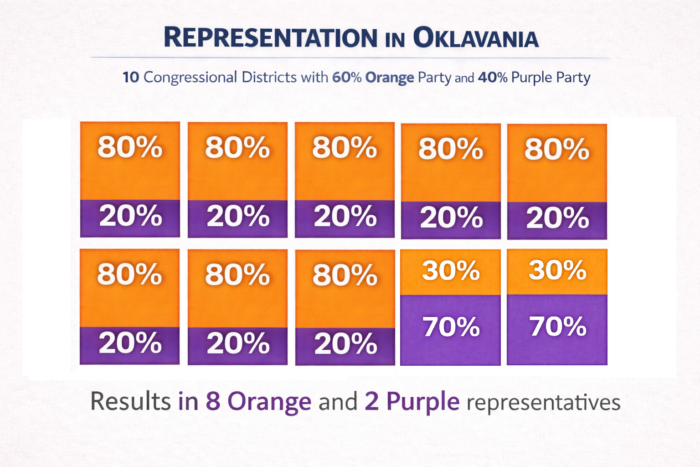 It is long past time the US eliminated gerrymandering, the drawing of district lines specifically for the purpose of favoring one political party, across the board. This requires either a 50 state agreement, or action at the federal level. This has been a problem since near the beginning of our democracy, and seems to be getting worse. We are now in the middle of a mid-decade tit-for-tat rash of gerrymandering that is extremely anti-democratic, so it’s a good time to raise this as an issue voters should definitely understand and prioritize.
As a quick aside – this is not a “political” blog, which does not mean that I never discuss political issues or topics with a political dimension. It partly means that I try my best to by non-partisan, and to avoid purely political value-judgements. I recognize this is an impossible ideal – we all have our biases and perspectives that color our thinking on topics in subtle ways. But we can try. Also, this is not a strictly science blog, it covers science, critical thinking, and media savvy, which are part of what we call scientific skepticism. Recently I started a video podcast, Political Reality, with co-host Andrea Jones Roy, who is a political scientist, for the purpose of applying scientific skepticism to political topics. This is also not a partisan show, and is mostly part civics lesson and part fact-checking. With that in mind, I thought I would write about what science and critical thinking have to say about gerrymandering, given that this is a topic in the news recently, although not as much as I think it should be. We also did cover this topic on Political Reality.
The term gerrymander dates back to 1812 when Massachusetts Governor Elbridge Gerry redistricted his state’s representative districts in order to favor his party, the Democratic Republicans. One of the districts looked like a salamander, leading the Boston Gazette to quip that it was really a “Gerry-mander”, and the name stuck. (Ironically, the two parts of that term, gerry and mander, both kinda sound like they mean “rig”, but the word has nothing to do with that.) Since then all political parties have used gerrymandering to gain unfair advantage. This stems from some features of US politics.
Continue Reading »
Apr
27
2026
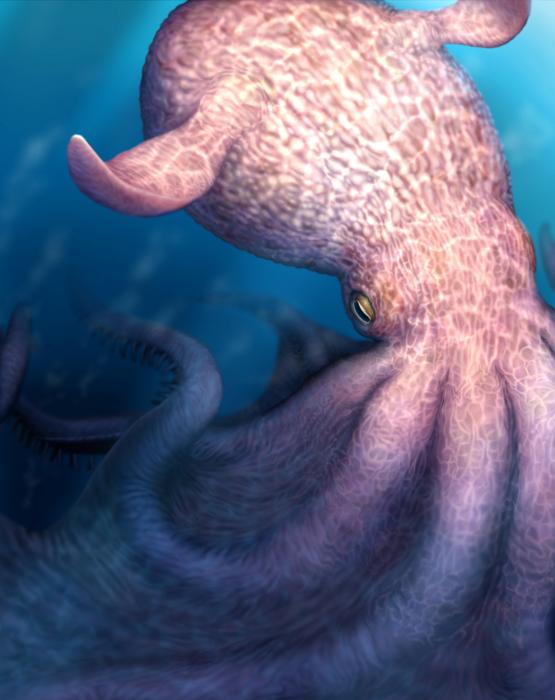 It’s an iconic image – a giant cephalopod with its tentacles wrapped around a sailing ship, tearing it apart as the crew panic. Eventually it drags the splintered remains down into the deep. Meanwhile, the largest living octopus is the Giant Pacific octopus (Enteroctopus dofleini), averaging about 16 feet long, however an exceptionally large specimen about 30 feet long weighing 600 pounds was found. The largest squid is the Colossal Squid (Mesonychoteuthis hamiltoni), reaching roughly 1,500 pounds (490–500 kg) and lengths up to 46 feet (14 m). That’s huge – but it’s no Kraken.
What about in the past? Everything was bigger in the past, right? That’s obviously a trope, but there is some truth to it, in that there have been ages of gigantism in the evolutionary past. In some periods and locations there are rich resources allowing for the evolution of larger body size, which comes with a number of survival advantages. This can set off an arms race of size, with prey becoming larger to avoid predation, and predators becoming larger to hunt bigger prey. The age of the dinosaurs is the most iconic example of this. But that, of course, does not mean that all lineages were necessarily larger in the past. Whales are a good example – the largest whales (and animals) to have ever lived are extant. So what about cephalopods? Are the largest ones living now, like with whales, or were there even larger ones in the past?
A new study examines the fossil remains of 12 giant octopuses that lived 100-72 million years ago. These were discovered and examined through grinding digital mining techniques at Hokkaido University in Japan. This method grinds very thin (25-50 micrometers) layers from a rock specimen, then takes a high resolution full color image of each layer. This method completely destroys the specimen, but results in a high resolution 3D image of any fossils within the rock. It uses AI models to reconstruct the fossils. The technique is used in cases where the fossils are too soft to X-ray (they are invisible to X-rays), cannot be chemically separated from the surrounding rock, and are too fragile for ordinary extraction. All of these are true for the soft beaks of octopuses.
Continue Reading »
Apr
23
2026
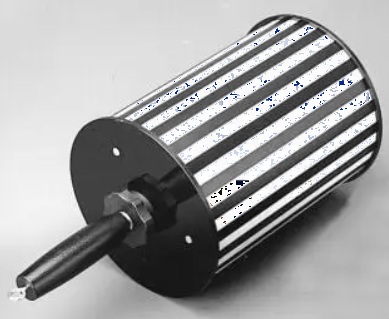 This interesting case was reported in the literature in 2007. For some reason it was then widely published in the mainstream media in 2015. Now it is making the rounds again on social media to support a false narrative about brain function. The story is of a 20 year old German woman who suffered a traumatic brain injury in a car accident. Over the next several months she started to slowly lose her vision – which is an important detail, it was not a sudden loss as a result of the physical trauma. After evaluation she was diagnosed with psychogenic blindness, meaning that it was not due to any physical damage to her visual system but was rather due to psychological stress. This patient also has what is now called dissociative disorder, or multiple personality, with 10 distinct personalities.
What makes the case even more interesting is that, with therapy, some of her personalities regained vision while others did not. Eventually eight of her ten personalities regained vision. This presented a rare, perhaps unique, opportunity to study the underlying neuroanatomical correlates of psychogenic blindness – what is happening in the brain when someone loses the ability for conscious sight despite their visual system working?
Psychogenic or functional neurological disorders are a complex and poorly understood phenomenon in which emotional stress and trauma presents as physical neurological symptoms. Common presentations include paralysis, language difficulty, sensory loss, and blindness. The diagnosis is mostly one of exclusion, which means sufficient examination and study is done to rule out any demonstrable damage, lesion, or other physical cause. This does not mean the patient is faking (technically called malingering) – that is a distinct condition that can usually be distinguished from a functional disorder. Usually patients with a functional disorder are very distressed by their symptoms and want further examination to find out what is wrong. In addition to simply ruling out physical causes, the diagnosis of a functional disorder can be supported by some positive evidence from the neurological exam. With psychogenic blindness, for example, patients will have normal pupillary responses (assuming no separate baseline deficit), and will have a normal reaction to optokinetic testing. This involves moving vertical black and white stripes horizontally across their vision. This will cause an involuntary response of tracking the stripes with eye movements. If this happens then we know that visual information is getting in and making its way to the visual cortex.
Continue Reading »
Apr
21
2026
 The latest social media buzz involves a list of scientists who have either died or gone missing over the last three years, with the implication that there must be something nefarious going on. The FBI is now investigating these cases to see if there is any connection, and the White House appears to be taking the case seriously. James Comer of the House Oversight Committee said: “It does appear that there’s a high possibility that something sinister is taking place here. It’s very unlikely that this is a coincidence. Congress is very concerned about this. Our committee is making this one of our priorities now because we view this as a national security threat.”
My initial reaction to stories like this is – these kinds of things crop up all the time and they always turn out to be just coincidences, or not even that. Sometimes they are just stories fabricated out of increasingly distorted information, almost always to serve some conspiracy narrative. So my reaction is the same as if someone claims to have seen Bigfoot or an alien spacecraft – initial skepticism is fully warranted, but sure, I am happy to take an objective look. This may be a rare case when there is a genuine phenomenon going on, and in any case this is what activist skeptic do – take a deep dive when these stories emerge.
Continue Reading »
Apr
20
2026
 Regeneration is one of the futuristic tropes of science-fiction, because it is both incredibly powerful and not theoretically impossible. Imagine the ability to regrow a lost limb, or simply to replace a diseased or worn out limb. There are about a million limb amputations worldwide every year, so it is a very common medical problem. What if we could regenerate organs? This would be a game-changer for medicine.
There are several approaches to addressing missing limbs or failing organs. One is the cyborg approach – make a mechanical version to replace the biological one. We are making progress here, with brain machine interfaces, mechanical hearts, and other advances. Or you could transplant the body part from another person, or even an animal that has been genetically modified to be compatible. You can also regrow the missing or failing body part from the intended recipient’s own tissues and then transplant that. Or you could inject stem cells programed to regrow the needed part inside the recipient. All of these options are active research programs, have shown some incredible promise, but are also years or even decades away, especially in their mature form.
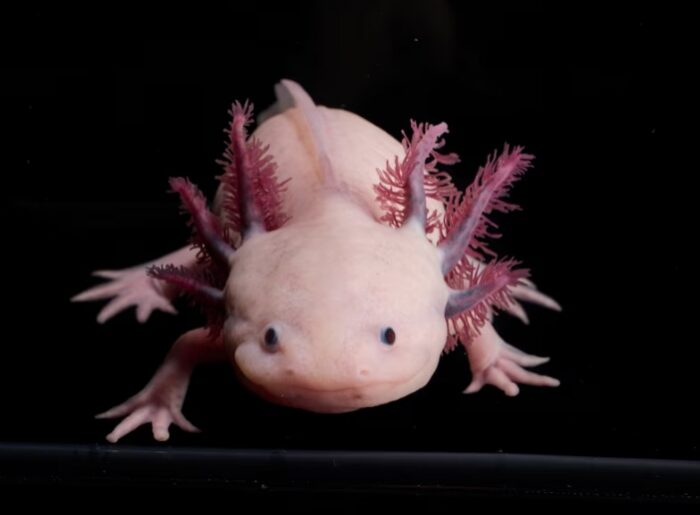
Let’s now add one more technology to the list – genetic therapy that triggers natural regeneration, meaning from the person’s own tissue. This has long been a target of potential therapy, inspired by the fact that there are many animals that can already naturally do this. Most extreme is the axolotl (a type of salamander that for some reason has become very population with the young generation), which can regenerate just about any of its body parts. They form a blastoma of pluripotent stem cells at the site of injury that can quickly regrow into a missing limb, heart, spinal cord, parts of the brain, etc. in weeks. There are also zebrafish, which can regrow their tail fins. Mice can also regrow missing digits, which is important because they are mammals showing that regeneration can happen even within the mammal clade. You don’t have to be a salamander.
Continue Reading »
Apr
16
2026
 The recent rapid advance in the capabilities of artificial intelligence (AI) applications I think qualifies as a disruptive technology. The term “disruptive technology” was popularized in 1997 by Clayton M. Christensen. To summarize, a disruptive technology is “an innovation that fundamentally alters the way industries operate, businesses function, or consumers behave, often rendering existing technologies, products, or services obsolete.” AI is potentially so powerful, and changing so quickly, that it is challenging to optimally regulate it. We are caught in a classic dilemma – we do not want to hamper our own competitiveness in a critical new technology, but we also don’t want to unwittingly create new vulnerabilities or unintended negative consequences. For now we seem to be erring on the side of not hampering competitiveness, which basically places us at the tender mercies of tech bros.
Which is partly why I found the conflict between Anthropic and the Department of Defense (still the legal name) so fascinating. In short, Anthropic’s powerful AI application, Claude, has at least two significant internal “red lines” or guardrails – it cannot be used for massive domestic surveillance, and it cannot be used for final military targeting, without a human in the loop. Anthropic CEO Dario Amodei has not backed down on this – he says that the first restriction on domestic surveillance is simply a matter of ethics. The second restriction, however, is mainly a matter of quality control – their system is still vulnerable to hallucinations and is not reliable enough to count on for final targeting decisions. Hegseth has criticized his concerns as “woke” and a critical vulnerability for the US military. More charitably, he say essentially that the US military is using the application lawfully, and should not be restricted in any lawful use of the software. Others have also stated that in an emergency they have to know the software will do whatever they ask it.
This conflict has many deep implications, and is beyond what I intend for this blog post. What I want to focus on is the fact that an AI application is creating this ethical dilemma, and forcing us to ask – who should control such awesome power, the CEO of a tech company or the Federal government? It seems that we are facing or about to face many similar questions provoked by the disruptive nature of recent AI applications.
Continue Reading »
Apr
14
2026
 Remember The Last Starfighter from 1984? In that movie a trailer-park kid with limited prospects spends his time on an arcade-style video game, Starfighter. He plays the game so much that he beats the final level, and it turns out he is the first person to ever do so. He is heavily criticized for spending so much time playing a game, which is seen as a sign of boredom and lack of ambition – a waste of time. The twist (42 year old spoiler incoming) is that the game was actually a test (the Excalibur test – a deliberate reference to King Arthur) to find a skilled pilot for an actual real-life starfighter. He goes on to save the galaxy from invasion.
The interesting premise of the movie is that playing a video game is not only a test of real-life skill, but can be used to train such skill. In 1984 this was kind of a new idea, and appealing to a generation of kids newly hooked on video games. Video games have been significantly mainstreamed over the last half century, but there is still a bit of a cultural stigma attached to them – they are seen as the realm of dorks and geeks, with inevitable jokes about how avid video gamers with “never get laid” (or something to that effect). Since the beginning of their popularity parents have worried, with such worry being fed by a sensationalist media, that video games were going to “rot” their kids’ brains, turn them into losers who can never get a skilled job, and might even cause violent behavior. Every mass shooting someone brings up violent video games.
But the evidence simply does not support these concerns. One big problem with the research is that it shows correlation only, not causation. Sure, people who play aggressive video games tend to be more aggressive, but that doesn’t mean the game is the cause. Further, there are many confounding factors, and more recent research shows that violence in the game is not the key feature. It has more to do with the level of difficulty and the resulting frustration that seems to raise aggression, not violence in the game. More competitive and difficult games tend to be more stimulating, regardless of the level of violence. The bottom line – after decades of research, systematic reviews conclude: “There is insufficient scientific evidence to support a causal link between violent video games and violent behavior.”
Continue Reading »
Apr
13
2026
 Last week I wrote about the possibilities of genetically engineering humans. The quickie version is this – we are already using genetic engineering (CRISPR) for somatic changes to treat diseases, and other applications are likely to follow. Engineering germline cells, which would get into the human gene pool, are legally and ethically fraught, but it’s hard to predict how this will play out. I have also written often about genetically engineering food. I think this is a great technology with many powerful applications, but it should be, and largely is, highly regulated to make sure that anything that gets into the human food chain is safe.
I haven’t written as much about genetically engineering pets, and this is likely to be the lowest hanging fruit. That is because pets are neither food nor are they a human medical intervention. But that does not mean they are not regulated – they are regulated in the US under the FDA and USDA. Genetic engineering is treated as an animal drug, and must be deemed safe to the animals being engineered. The USDA also can regulate engineered plants and animals to make sure they do not pose any risk to the environment, humans, or livestock. This makes sense. We would not want, for example, to allow a company to release a genetically engineered bee, pest, or predator into the environment without proper oversight.
Pets, as a category, are domesticated, are not intended to be used as food, nor are they intended to be released into the wild. I say “intended” because pets can become food for predators, and they can escape or be released into the wild, and even become feral. But these contingencies are much easier to prevent than with food or wild plants or animals. For example, if you get a rescue pet, it has likely already automatically been spade or neutered. One easy way to reduce risk would be to make any GE pet sterile, which is likely what the company would want to do anyway to prevent violation of their patents through breeding. In short, it seems that reasonable regulatory hurdles should not be a major problem for any effort to commercialize GE pets.
Continue Reading »