Feb 06 2024
Weaponized Pedantry and Reverse Gish Gallop
 Have you ever been in a discussion where the person with whom you disagree dismisses your position because you got some tiny detail wrong or didn’t know the tiny detail? This is a common debating technique. For example, opponents of gun safety regulations will often use the relative ignorance of proponents regarding gun culture and technical details about guns to argue that they therefore don’t know what they are talking about and their position is invalid. But, at the same time, GMO opponents will often base their arguments on a misunderstanding of the science of genetics and genetic engineering.
Dismissing an argument because of an irrelevant detail is a form of informal logical fallacy. Someone can be mistaken about a detail while still being correct about a more general conclusion. You don’t have to understand the physics of the photoelectric effect to conclude that solar power is a useful form of green energy.
There are also some details that are not irrelevant, but may not change an ultimate conclusion. If someone thinks that industrial release of CO2 is driving climate change, but does not understand the scientific literature on climate sensitivity, that doesn’t make them wrong. But understanding climate sensitivity is important to the climate change debate, it just happens to align with what proponents of anthropogenic global warming are concluding. In this case you need to understand what climate sensitivity is, and what the science says about it, in order to understand and counter some common arguments deniers use to argue against the science of climate change.
What these few examples show is a general feature of the informal logical fallacies – they are context dependent. Just because you can frame someone’s position as a logical fallacy does not make their argument wrong (thinking this is the case is the fallacy fallacy). What logical fallacy is using details to dismissing the bigger picture? I have heard this referred to as a “Reverse Gish Gallop”. I’m don’t use this term because I don’t think it captures the essence of the fallacy. I have used the term “weaponized pedantry” before and I think that is better.
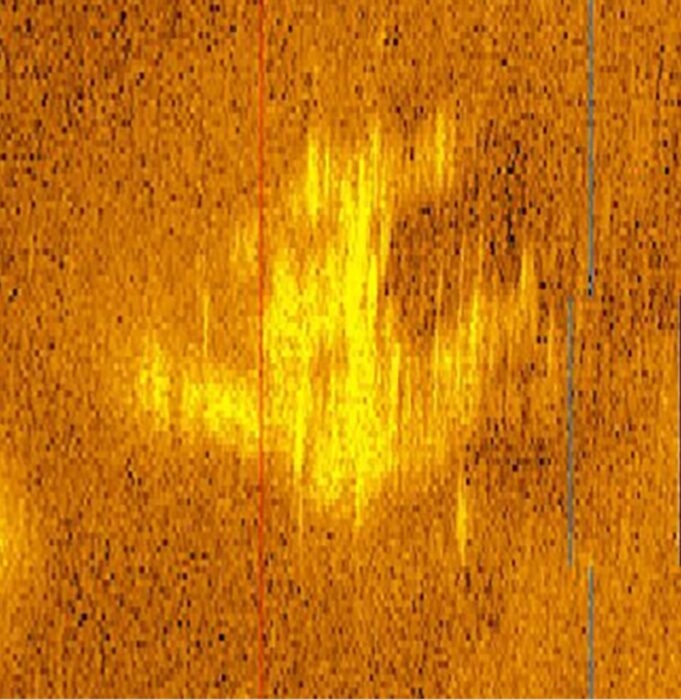 Is this sonar image taken at 16,000 feet below the surface about 100 miles from Howland island, that of a downed Lockheed Model 10-E Electra plane?
  Homer: Not a bear in sight. The Bear Patrol must be working like a charm.
 It’s difficult to pick winners and losers in the future tech game. In reality you just have to see what happens when you try out a new technology in the real world with actual people. Many technologies that look good on paper run into logistical problems, difficulty scaling, fall victim to economics, or discover that people just don’t like using the tech. Meanwhile, surprises hits become indispensable or can transform the way we live our lives.
 Elon Musk
  There is an ongoing battle in our society to control the narrative, to influence the flow of information, and thereby move the needle on what people think and how they behave. This is nothing new, but the mechanisms for controlling the narrative are evolving as our communication technology evolves. The latest addition to this technology is the large language model AIs.
 My
My  Arguably the type of advance that has the greatest impact on technology is material science. Technology can advance by doing more with the materials we have, but new materials can change the game entirely. It is no coincidence that we mark different technological ages by the dominant material used, such as the bronze age and iron age. But how do we invent new materials?
 As I have written many times, including in yesterday’s post, people occupying space is hard. The environment of space, or really anywhere not on Earth, is harsh and unforgiving. One of the issues, for example, rarely addressed in science fiction or even discussions of space travel, is radiation. We don’t really have a solution to deal with radiation exposure outside the protective atmosphere and magnetic field of Earth.
 In the excellent sci fi show, The Expanse, which takes place a couple hundred years in the future, Mars has been settled and is an independent self-sustaining society. In fact, Mars is presented as the most scientifically and technologically advanced society of humans in the solar system. This is presented as being due to the fact that Martians have had to struggle to survive and build their world, and that lead to a culture of innovation and dynamism.