Jun 11 2018
The State of Carbon Capture
 The basic idea of carbon capture is fairly simple – in order to counteract industries that release CO2 into the atmosphere, we develop technologies that remove CO2 from the atmosphere. If these industries exist in near balance, then there will be no net increase in CO2.
When you think about it, we do have to eventually get there – to the point that human activity does not result in a net increase in CO2 in the atmosphere. Any significant amount will build up over time and have an effect. We need to get down to negligible amounts, compatible with homeostasis and indefinite sustainability.
Clearly we are not there now. Currently the world emits about 9.8 gigatonnes (billion tonnes) of carbon per year. That carbon winds up in the air (44%), ocean (26%) and land (30%). Ninety-one percent of these emissions come from fossil fuels: “coal (42%), oil (33%), gas (19%), cement (6%) and gas flaring (1%).”
One obvious way to reduce global carbon emissions, therefore, is to use carbon neutral sources of energy to replace fossil fuels. But no energy source is completely carbon neutral – you still have to build the wind turbines and solar panels, or farm the biofuels. Also, until we find a replacement for cement, that industry will still release massive amounts of carbon. So there is certainly a lot of room to reduce our carbon emissions, but it does not seem that we will reduce them to globally negligible anytime soon.
Carbon capture, therefore, is an attractive idea. However much carbon we remove from the environment (air, water, and soil) gives us a budget of carbon we can afford to release into the environment with other industries. The consensus, however, is that carbon capture technology is no where near being a magic solution to climate change and carbon. At best it will be one of many technologies that inch us toward a carbon-neutral future.
 Gilles-Éric Séralini is a French researcher who came to fame
  The National Health Service (NHS) in England decided in November 2017 to stop funding homeopathic treatments. That was an excellent decision, made for the right reasons – “lack of robust evidence of clinical effectiveness”. While I think that is an understatement, it is true enough, and is sufficient justification for any modern health care system to abandon homeopathy.
 One of the cutting edge medical technologies that promises to be a game-changer in terms of our ability to affect biological function is the interaction between machines and biology. Of course we already have many medical devices, from cardiac pacemakers to artificial joints. Increasingly sick and aging humans are becoming cyborgs, as we augment and replace broken body parts with machines.
 Science and the enlightenment are under assault from many directions, and in many incarnations, but they all tend to boil down to the same basic idea – other ways of knowing, and a rejection of the rigorous academic standards typified by science and scholarship.
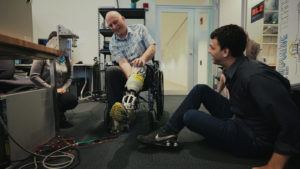 I have been following the development of brain-machine interfaces and their application to artificial (prosthetic) limbs.