Feb 13 2024
Flow Batteries – Now With Nanofluids
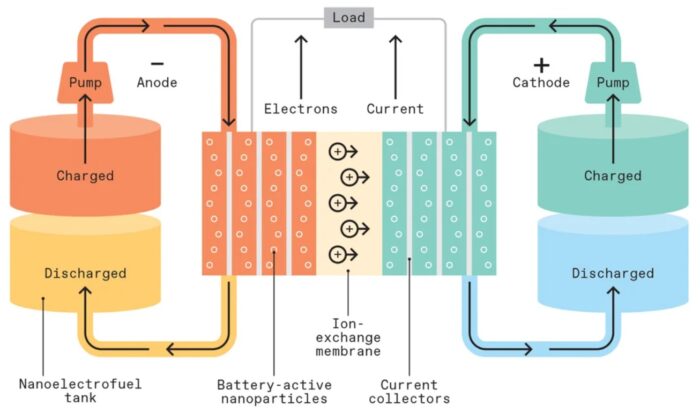 Battery technology has been advancing nicely over the last few decades, with a fairly predictable incremental increase in energy density, charging time, stability, and lifecycle. We now have lithium-ion batteries with a specific energy of 296 Wh/kg – these are in use in existing Teslas. This translates to BE vehicles with ranges from 250-350 miles per charge, depending on the vehicle. That is more than enough range for most users. Incremental advances continue, and every year we should expect newer Li-ion batteries with slightly better specs, which add up quickly over time. But still, range anxiety is a thing, and batteries with that range are heavy.
What would be nice is a shift to a new battery technology with a leap in performance. There are many battery technologies being developed that promise just that. We actually already have one, shifting from graphite anodes to silicon anodes in the Li-ion battery, with an increase in specific energy to 500 Wh/kg. Amprius is producing these batteries, currently for aviation but with plans to produce them for BEVs within a couple of years. Panasonic, who builds 10% of the world’s EV batteries and contracts with Tesla, is also working on a silocon anode battery and promises to have one in production soon. That is basically a doubling of battery capacity from the average in use today, and puts us on a path to further incremental advances. Silicon anode lithium-ion batteries should triple battery capacity over the next decade, while also making a more stable battery that uses less (or no – they are working on this too) rare earth elements and no cobalt. So even without any new battery breakthroughs, there is a very bright future for battery technology.
But of course, we want more. Battery technology is critical to our green energy future, so while we are tweaking Li-ion technology and getting the most out of that tech, companies are working to develop something to replace (or at least complement) Li-ion batteries. Here is a good overview of the best technologies being developed, which include sodium-ion, lithium-sulphur, lithium-metal, and solid state lithium-air batteries. As an aside, the reason lithium is a common element here is because it is the third-lightest element (after hydrogen and helium) and the first that can be used for this sort of battery chemistry. Sodium is right below lithium on the period table, so it is the next lightest element with similar chemistry.
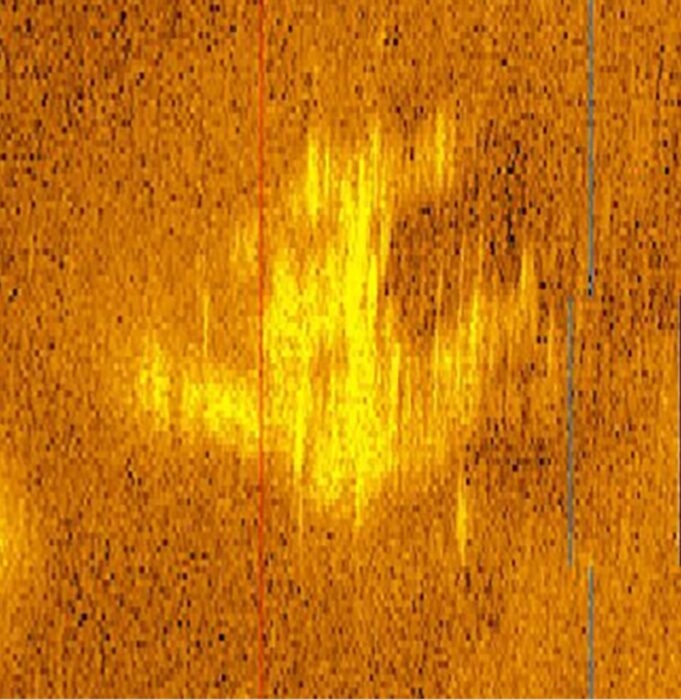 Is this sonar image taken at 16,000 feet below the surface about 100 miles from Howland island, that of a downed Lockheed Model 10-E Electra plane?
  Elon Musk
 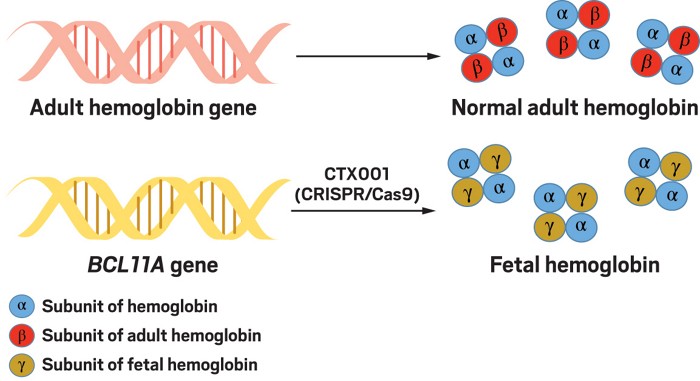 This is not exactly a “best of” because I don’t know how that applies to science news, but here are what I consider to be the most impactful science news stories of 2023 (or at least the ones that caught by biased attention).
 It’s Halloween, so there are a lot of fluff pieces about ghosts and similar phenomena circulating in the media. There are some
  There are
  From time to time the Earth gets hit by a wave of energetic particles from the sun – solar flares or even coronal mass ejections (CMEs). In 1859 a large CME hit Earth (known as the Carrington Event), shorting out telegraphs, brightening the sky, and causing aurora deep into equatorial latitudes. If such an event were to occur today experts are not exactly sure what would happen, but it could take out satellites and short out parts of electrical grids. Interestingly, we have a historical record of how often such events have occurred in the past, mostly from tree rings.
 In
In 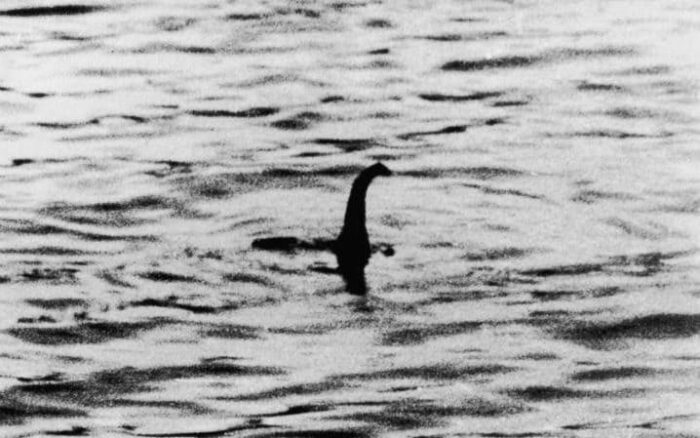 At this point it is pretty clear that the Loch Ness Monster (Nessie) does not exist. I know, logically it is impossible to prove a negative, so if we want to be technical we can say that the probability of a large creature similar to that believed to be Nessie approaches zero. The original 1934 photograph that created the Nessie phenomenon