Nov
11
2021
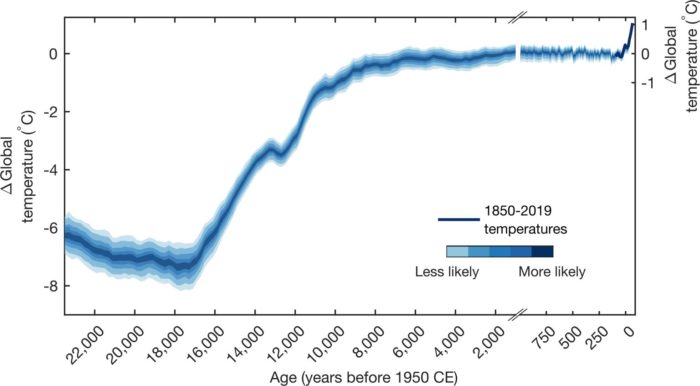 While the world debates how best to reverse the trend of anthropogenic global warming (AGW), scientists continue to refine their data on historical global temperatures. A recent study published in Nature adds to this a high resolution picture of average surface temperatures over the last 24,000 years, since the last glacial maximum. The study reinforces the conclusion that the last century of warming is unprecedented over this time frame, and does not reflect any natural cycle but rather the effects of human forcing.
To construct their map of past temperatures, the researchers combined two methods. They used a dataset of chemical analysis of marine sediments, which are affected by local average temperatures. They combined this with a dataset based on computer-simulated climate models. The idea was to leverage the strengths of each approach to arrive at a map of historical surface temperatures that is more accurate than either method alone.
Of course, no one study is ever the final word, but this reconstruction is in line with other research using independent methods and data. The authors also draw two other main conclusions from their data. There has been a debate about whether or not the last 10,000 years had a small warming trend, and this graph supports that conclusion. Further, the authors conclude that the main driver of the large warming trend starting around 17,000 years ago is the retreat of the glacial ice sheets, but that the main driver of the rapid warming over the last 150 years is increasing green house gases. The rate of this recent warming is also out of proportion to any natural cycle detected in the last 24,000 years.
Continue Reading »
Jun
07
2021
 A few years ago I was sued for libel, in a case I ultimately won in summary judgement where the other side had to pay for some of my legal costs because the judge deemed it unreasonable. But the case did proceed to discovery, which means each side gets to request information from the other. This included me turning over something like 40,000 e-mails. Search tools allow for sifting through these e-mails to find those that may be relevant. And of course, the other side was able to find e-mails that they could twist to create the impression of something sinister. Fortunately, in a court of law, there are rules of evidence and logic, and there was time to dig down to see if the e-mails in fact were evidence of anything. They weren’t.
In the court of public opinion, however, there are no rules. FOIA (Freedom of Information Act) can serve as a mechanism for discovery, and many academics, scientists, and public servants have been on the receiving end of them. Released e-mails can then be picked over with the zeal of a prosecuting attorney, but without ever facing the burden of legal protocol or a trained judge. In fact the purpose of this exercise is not to dig down to the truth but to cherry pick for anything that can be taken out of context to fuel conspiracy theories or to tarnish the other side. The purpose begins and ends with the twisting to create a sinister impression, and the results of any actual investigation are irrelevant (at least to many).
The first high-profile case of such an “e-mail gate” was with hacked e-mails from the Climate Research Unit. Investigations ultimately found no evidence of any deception or anything nefarious going on, but the damage was done. The fact is, in any scientific process scientists will discuss many things with each other. A lot of crap will be thrown against the wall, and it’s very easy to take casual conversations out of context. Anti-science activists saw this as a template, and began using FOIA requests to harass scientists and hunt for similar gotchas.
Continue Reading »
Apr
22
2021
 European Union (EU) agricultural scientists are in a bit of a pickle. I’m not sure to what extent it is one of their own making or how much it was imposed upon them by politics and public opinion, but they are now confronting a dilemma they at least ignored if not helped to create. The question is – how best to achieve sustainable agriculture in a world with a growing population? This problem is made more difficult by the fact that we already tapped the most efficient arable land, so any extension of agricultural land will necessarily push into less and less efficient land with greater displacements of populations and natural ecosystems.
The dilemma stems from the EU’s regulatory support for organic farming. The core problem is actually the very concept of organic farming itself, which is rooted historically and ideologically in pseudoscience. Organic farming is philosophy-based rather than science-based farming – it is a manifestation of the appeal to nature fallacy. The result is a set of specific rules in order to qualify as “organic” that mostly represent a rejection of modern agricultural technology. There are some good things in there as well. Sometimes low tech methods are best. But organic farming does not use the best most sustainable methods. It uses the most “natural” methods, by some vague, arbitrary, gut-feeling criteria. So, for example, you can use pesticides, but only if they are derived from natural sources, even if they are less effective and more toxic. You also can’t irradiate food, because irradiation seems scary (even though it safely reduces food spoilage thereby reducing waste and foodborne disease).
And of course the organic farming industry is driving the biggest controversy in agriculture – the use of genetically modified organisms (GMOs). This is the focus of a new paper by EU agricultural scientists who now have to confront the organic farming hobgoblin which is getting in the way of sustainable farming. Here are the highlights: They open by dispensing with the most common argument used to dismiss the need for GMOs and justify organic farming inefficiency –
Sustainable food systems will require profound changes in people’s consumption patterns and lifestyles, which is true regardless of the farming methods used and does not change the fact that organic farming often requires more land than conventional farming for the same quantity of food output.
Continue Reading »
Apr
01
2021
 There are many times as a skeptic that I wish I were wrong. I really want to detect an alien artifact, and would love free energy, cold fusion, and a cure for cancer. I completely understand why these ideas have endless allure and the temptation to engage in a small bit of motivated reasoning to see the science from a particular, if odd, angle. But science does not progress this way. It progresses through the cold and heartless removal of error, by brutally smashing the pillars of our own vanity, fear, and desires, and by controlling for our own biases and shortcomings. I often refer to the peer-review process as a meat-grinder – it chews up and spits out ideas, but there is a product at the end – and that goes right back into the meat-grinder for another round.
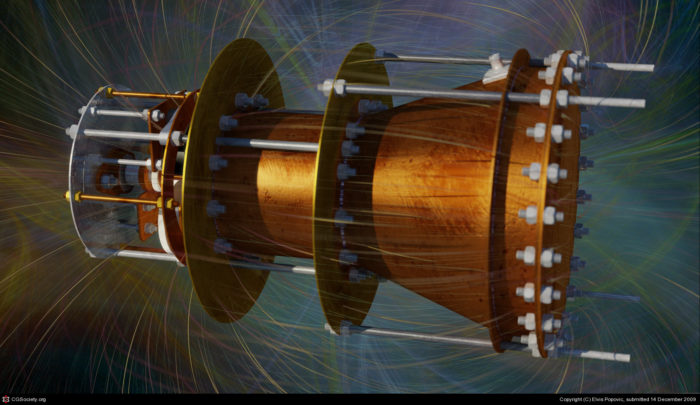
One more really tempting idea now bites the dust – the EM Drive. I first wrote about this almost seven years ago. The idea is to create propellantless propulsion. This would revolutionize space travel, and could potentially even create that flying car we always wanted. Now, in the world of physics, in order to accelerate something there needs to be a force acting on it. If you want a rocket to go up, then you need to throw some mass from the rocket down so that the mass and velocities match (equal and opposite). So rockets need propellant, something to throw out their back. Ideally this is something very light that gets accelerated to really high speeds to produce the maximal thrust to the rocket.
While this concept works just fine, it is also extremely limiting, by something known as the rocket equation. The rocket needs to carry enough fuel to accelerate the entire rocket, including all the fuel it is carrying. So it needs fuel to carry the fuel to carry the fuel… This means there is a geometric rather than linear relationship between speed and range and how big a rocket and its fuel has to be. For many chemical rockets the fuel is the propellant; when you ignite it the fuel rapidly heats and expands and gets pushed out the exhaust. Other rocket designs may have a separate energy source and propellant. Ion drives, for example, create energy to power magnets which accelerate charged particles to extreme velocities.
But what if you did not need propellant? What if all you needed was energy, and could somehow use that energy to create thrust without having to throw any matter out the back end? That would drastically alter the rocket equation. This would reduce the cost of space travel and open up the solar system. It might even make it practical to get to nearby stars – in a hundred years we might have a fusion powered ship that can zip around the galaxy at a constant 1G acceleration.
Continue Reading »
Jan
12
2021
 Would you be willing to pay $35 for a sticker you put on the back of your phone? What if it had “magical” properties that protect you from something that is not harmful in the first place? That is the idea (it seems to me) behind the SmartDot product, made in the UK. On Amazon they claim: “smartDOT Radiation Protection is a low powered magnet programmed with an intelligent combination of natural harmonizing frequencies which reduces harmful EMF radiation emitted by your wireless devices and alleviate symptoms of electro-stress.”
This is now boilerplate EMF pseudoscience. What are “harmonizing frequencies”? Nothing – this does not even exist as a concept in science. It’s just nice-sounding jargon for the scientifically illiterate. Also, EMF from smartphones are not dangerous and do not cause any known health issues. Further still there is no such thing as “electro-stress”.
One thing I wanted to point out is what happened when the BBC investigated these stickers. They report:
“But University of Surrey tests for BBC News found no evidence of any effect.”
Total lack of surprise there. The stickers were just stickers, with no energy, no field, and no apparent effect that could be detected. The company responded in a typical way – to make their claims essentially unfalsifiable, or at least as difficult as possible to falsify.
“The Devon-based company told BBC News the stickers were programmed with “scalar energy”, which the scientists’ equipment would be unable to detect.”
Continue Reading »
Dec
07
2020
 Recently someone on Quora asked the question – does Chi exist? The answers were mostly positive, which is not surprising given the likely selective nature of who decided to answer. There is, however, a clear answer to this question – no. At least, that is the scientific answer, as much as science can determine a negative. We can be as confident in this answer as saying that Unicorns and Leprehauns don’t exist.
Some of the Quora answers included, “There’s a word for it so it must exist otherwise it would have no word/s about it. Every culture-language-dialect has a word for chi and lots of words to describe the various aspects of chi.”
Of course this is not true. We have words for many concepts that simply don’t exist. See, for example, all of mythology. This may seem like an obvious point to make, and it is, but I think it is common to assume that “where there is smoke there is fire.” If a belief is common enough, it must be at least based on something real. There is also a romanticism about the notion that our treasured mythologies might be based upon some historical reality (even if the details have been altered). We want to believe that there was a real Robin Hood roaming around Sherwood forest, and that Sherlock Holmes was solving cases from 221B Baker Street.
Why would so many cultures believe in a life force like Chi if there was nothing to it? There are many reason. The first is cultural contamination – people moved around the world and their ideas moved with them, even in ancient times. Also, some ideas are obvious or represent something fundamental. It is clear that living things are different from non-living things, but pre-scientific cultures did not have the foundation of knowledge to understand this difference. So they simply attached a word to it – whatever that thing is that make life alive is the “life force” – chi (or qi) in Eastern cultures. The details, however, will vary from culture to culture. Chi was believed to be in the blood, while the Greek’s “pneuma” was in the breath, and the more modern “innate” of chiropractors flows through nerves.
Continue Reading »
Dec
04
2020
 It can be amusing when there are multiple layers of fraud in a single scam, but it’s still a scam. With the holiday shopping season upon us, there are lots of products out there exploiting fear, pseudoscience, and scientific ignorance. The “Large WiFi Router Guard” now available from Amazon is a great example. Let’s unpack how silly this product is.
The seller claims that the router guard, “Blocks about 90% of the EMF large WiFi routers emit including the new 5G.” I’ll get to why some people think they should do this below, but first – let’s consider how nonsensical this very idea is. The entire point of a WiFi router is to take your internet signal and then broadcast it using electromagnetic frequencies in a radius that covers your home or office, typically 50-100 feet. If you need to cover a larger area you can use a repeater, which will pick up the signal and then boost it to extend the range. You can also use a mesh WiFi system which uses multiple devices to give larger and more consistent coverage.
The obvious problem with a WiFi router blocker is that you are blocking the essential function of the router – it can’t work if you are blocking the very signal it is designed to release. The product listing says that it can do this, “without affecting router network speed and performance,” which is impossible. I guess technically you can say that the router is still working, and you have not affected it directly, but you have effectively blocked its speed and performance outside the cage. If you are blocking 90% of the signal, you are blocking 90% of the performance.
As an aside, this product is essentially a small Faraday cage. In that respect, it does actual work in that it will block EMF. A Faraday cage is essentially an enclosure of continuous conducting material. Electrical fields will essentially distribute themselves around this outside conducting material, and those fields will tend to cancel out within cage. So if you are inside a perfect Faraday cage, you are protected from even intense electrical activity happening outside the cage. You can even touch the inside of the cage safely.
This is why, by the way, if you are in your car during a bad electrical storm, or when there is a downed power line nearby – stay in your car. It will act to some degree like a Faraday cage an can protect you.
Continue Reading »
Nov
03
2020
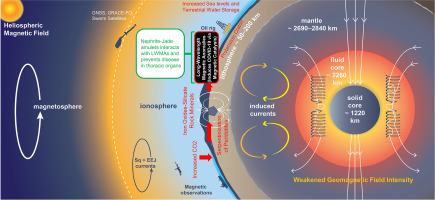 Retraction Watch has an interesting article about a very curious paper published in Science of the Total Environment. In fact, the paper and communication from the lead author are so bad I have to wonder if its a Sokal-like prank. If not, it is more evidence that the world has become so weird there are many things which are beyond satire. But let’s take this at face value. The title of the paper is: “Can Traditional Chinese Medicine provide insights into controlling the COVID-19 pandemic: Serpentinization-induced lithospheric long-wavelength magnetic anomalies in Proterozoic bedrocks in a weakened geomagnetic field mediate the aberrant transformation of biogenic molecules in COVID-19 via magnetic catalysis.”
Many scientific publications are extremely technical and require very long technical descriptions, but my “gratuitous jargon” alarm went off at this title. The paper itself is worse – I get the distinct impression it is using jargon not to be precise, but to impress and befuddle. But wading through the jargon, the claim here that has caught attention is this – “Nephrite-Jade amulets, a calcium-ferromagnesian silicate, may prevent COVID-19.” What? Wearing a jade amulet may prevent COVID-19? You are going to have to do better than dazzling with jargon to make that claim stick, or even to get it taken seriously. The fact that the authors reference Traditional Chinese Medicine (TCM) does not help either.
The co-founder of Retraction Watch, Ivan Oransky, wanted to get to the bottom of it also, so he wrote the following e-mail to the corresponding author, Moses Turkle Bility, PhD. Oransky wrote:
“Dr. Bility
I blog at Retraction Watch. Can you confirm that you co-authored this paper?”
That was it – a very simple query to confirm authorship. This is pretty standard in academia, just dotting all the i’s. This was Dr. Bility’s response:
Dear Dr. Ivan Oransky, yes, I published that article, and I kindly suggest you read the article and examine the evidence provided. I also suggest you read the history of science and how zealots have consistently attempted to block and ridicule novel ideas that challenge the predominant paradigm from individuals that are deem not intelligent enough. I not surprised that this article has elicited angry responses. Clearly the idea that a black scientist can provide a paradigm shifting idea offends a lot of individuals. I’ll be very candid with you; my skin color has no bearing on my intelligence. If you have legitimate concerns about the article and wish to discuss, I’ll address; however, I will not tolerate racism or intellectual intolerance targeted at me.
Whoa, where is that coming from? I suspect that Dr. Bility has already received some pushback prior to getting the very innocent query from Retraction Watch, but such a response is extremely telling. Bility immediately goes for the “small minded bigots can’t appreciate my paradigm-shifting brilliance” card. Sorry, Dr. Bility, but with that reaction you just branded yourself a crank and a pseudoscientist. Perhaps that’s not fair, but neither is this massively out-of-proportion response.
Continue Reading »
Apr
03
2020
 As a skeptical science communicator I am constantly walking the line between hope and cynicism. On the one hand, I very much take to heart Carl Sagan’s approach to science – focusing on the absolute wonder of the universe, and celebrating the curiosity and ingenuity of humanity. We have peered into the past, walked on the moon, and decoded many of the secrets of life. Science is a powerful tool that has transformed the world more in the last few centuries than in tens of thousands of years beforehand. And yet, humanity still struggles with the demons of our evolutionary history. We are tribal, superstitious, and capable of surrendering our critical thinking to a charismatic leader.
What this all means is that when we are faced with a challenge, even a crisis, we are capable of meeting it. We can bring the tools of science, philosophy, and politics to bear to solve almost any problem. And yet the extent to which we will fail to do so is a consequence of our own stupidity and lack of critical thinking. There is nothing like a pandemic to reveal all of this – the good and the bad.
On the bright side, there have already been thousands of studies of the novel coronavirus (SARS-COV-2) and the disease it produces, COVID-19. Researchers are already exploring possible treatments and developing a vaccine. Meanwhile, we have solid mechanisms everyone can use to protect themselves and slow the spread of disease. Where implemented properly and in time, these strategies work. Compare this to just 100 years ago, during the 1918 flu pandemic. That pandemic killed at least 50 million people worldwide – and that magnitude was created largely by the world’s collective failure to properly understand and deal with the virus. They had no treatment, no vaccine, and utterly failed to enact adequate public health measures (for sure, this was partly due to the fact that they were fighting a world war and many politicians prioritized the war effort over mitigating the pandemic). Go back a bit further to the black death, which killed a third of Europe, and they did not even understand the nature of the pandemic. Their ignorance made them all but helpful before it.
Today, through science we understand exactly what is going on, down to the molecular level. And we have the methods to quickly (relatively speaking) figure our how best to address it. It is still a challenge, because the pandemic is moving quickly, but all we really have to do collectively is not panic and listen to our own experts. But of course, it’s never that simple. Some people will find a way to screw it up, because humanity is a complex mixture of motivations, biases, and emotions.
Continue Reading »
Nov
11
2019
 It is always interesting, and incredibly useful, to have insight from someone on the inside of a pseudoscience. Occasionally, someone who’s logical ability and intellectual honesty are reasonably intact gets sucked into a world of pseudoscience. If they are able to emerge out the other end still able to engage meaningfully with reality, they may have an incredible tale to tell. For example, Britte Hermes is a former naturopath who is now a real scientist and is able to report what really goes on in the world of fake medicine. Another example is Mark Edward, a former “psychic” who wrote his own tell-all. In such situations I have always found that things are much worse than even the fevered imaginings of a jaded skeptic.
The Guardian provides another useful example – the confessions of a former astrologer. Please read the full article. It provides concise insight into the psychology and business of new-age nonsense. The author, Felicity Carter, started dabbling in Tarot readings as entertainment, and as the story often goes, was convinced by the amazing accuracy of some of her readings. While she increasingly took her readings and her psychic power seriously, she always kept one foot in the “real” world and was apparently intellectually honest enough to ask important questions (at least in her current telling). Here are some of the key insights she provides.
The first is the way the new-age mind works. She states, “Astrology is one big word association game.” This is typical pre-scientific superstitious thinking. It probably derives from the fact that the human brain largely functions through association. We’re really good at it. We casually use analogies, and our literature is replete with metaphor. The problem comes from confusing metaphor for reality. This is often referred to as sympathetic magic, which is the conceptual underpinning of many pseudosciences, like homeopathy. In this world-view metaphors are not just abstract connections made in the human brain, they actually exist out there in the physical world. The happenstance arrangement of some stars as viewed from Earth slightly resembles a lion in the human imagination, so this virtual pattern actually imbues the qualities that humans perceive lions possess. It is an extreme metaphysical view of reality, with the universe being imbued with cosmic magic. If it makes you feel better you can say it’s quantum something. What matters is our gut intuition that metaphors are real.
All this makes it very easy to give a reading, regardless of the specific tools used – Tarot, astrological charts, tea leaves, numerology, or nothing at all. All you have to do is riff on free associations.
Continue Reading »