Jun
30
2022
 From a neurological and evolutionary perspective, music is fascinating. There seems to be a deeply rooted biological appreciation for tonality, rhythm, and melody. Not only can people find certain sequences of sounds to be pleasurable, they can powerfully evoke emotions. Music can be happy, sad, peaceful, foreboding, energetic or comical. Why is this? Music is also deeply cultural, with different cultures independently developing forms of music that are very different from each other. All human cultures have music, so the question is – to what extent are the details of musical appreciation universal vs culturally specific?
In Western music, for example, there are minor and major scales, chords, and keys. This refers to the combinations of notes or intervals between them. Music in a minor key tends to evoke emotions of sadness or foreboding, while those in a major key tend to evoke happiness or brightness. Would anyone from any culture interpret major and minor key music the same way? Research suggests that major and minor emotional effects are universal, but a recent study casts a little doubt on this conclusion.
The researchers looked at different subpopulations of people in Papua New Guinea, and both musicians and non-musicians in Australia. They chose Papua New Guinea because the people there share a common musical tradition, but vary in their exposure to Western music and culture. The experiment was simple – subjects were exposed to major and minor music and were asked to indicate if it made them feel happy or sad (the so-called emotional “valence”). Every group had the same emotional valence in response to major and minor music – that is, except one. The one group that had essentially no exposure to Western culture and music did not have the same emotional reaction to music.
Continue Reading »
May
31
2022
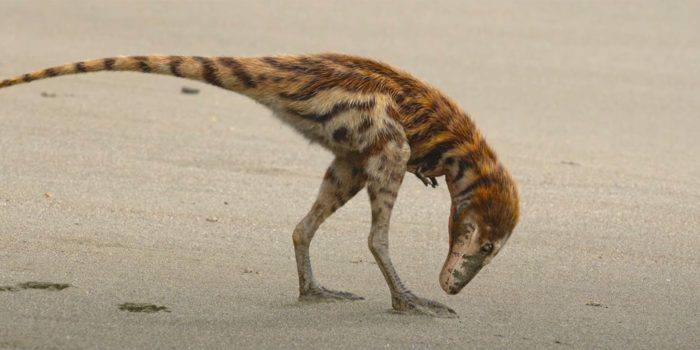 If you haven’t seen the new series, Prehistoric Planet, hosted by David Attenborough, you should see it. The visuals are stunning, the science is updated, and it provides a compelling look into the world of dinosaurs and other animals contemporary to the dinosaurs. While watching an episode last night, depicting a velociraptor leaping around energetically, my wife asked, “Were dinosaurs cold-blooded?” The classic concept of dinosaurs is of large lumbering and slow animals, cold-blooded (ectothermic) like other reptiles. However, scientists have long suspected that some if not all dinosaurs may have been warm-blooded (endothermic) – hence the updated vision of dinosaurs as energetic animals. (The picture is of a baby T-Rex.)
Birds, which are dinosaurs, are very endothermic, even more so than mammals. So the real question is not if dinosaurs were endothermic, but when in their evolution did they become so. One reasonable hypothesis is that the bird clade evolved endothermic metabolism in order to fuel their very high energy lifestyle of flying, so it may be a later development within the bird subgroup. In any case, I gave a short version of that answer, continued to watch the show and vowed to update my knowledge on where the question of dinosaur metabolism lies. By coincidence, a recent study sheds considerable light on this question, possibly settling it, in fact.
Ectothermic vs endothermic metabolism is mostly about how efficiently oxygen is metabolized with fuel in the body to produce energy, which also produces heat as a byproduct. Ectothermic creatures, like modern reptiles, burn oxygen slowly, so that can eat less, breath less, but also are less active. Further, their metabolism does not produce that much heat, so that cannot regulate their own body temperature. They have to use the environment to do so, like basking in the sun. We have a skink as a pet, and you have to provide a warm and cool side to their environment, so that they can use external temperature to regulate their internal temperature.
Continue Reading »
Mar
21
2022
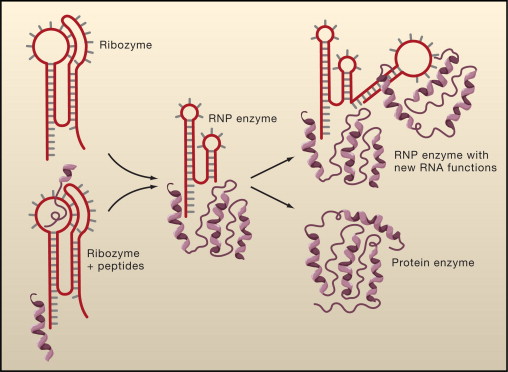 It is common to observe that one of the greatest unsolved questions of science is how life began. This is a distinct question from how the diversity of the species of living things emerged. It is well established that once life had established a self-replicating system capable of generating some variation, that evolutionary forces would kick in and could, and in fact did, create all life on Earth. But we are a long way from reverse-engineering in any detail how those first organic molecules transitioned from chemistry to life.
This is not a scientific question that will be meaningfully resolved with a single experiment or discovery. Answers will slowly yield over time, as they already are, and it will take decades and perhaps centuries for something approaching a complete picture to emerge. But this progress will be built one study at a time, and Japanese scientists have recently contributing a significant piece to the puzzle.
Researchers at the University of Tokyo published a study in Nature Communications in which they establish that an RNA system can spontaneously evolve complexity. RNA molecules are one of the primary candidates for the first prebiotic molecules that lead to life. RNA is a single-stranded version of DNA, a self-replicating molecule built from four bases forming two pairs. The idea is that life started with the formation of a “replicator” – a molecule that could make copies of itself. RNA is a leading candidate for being the first replicator, but DNA and proteins are also candidates. So far we have not yet been able to connect an “RNA world” with a later world comprised of DNA and proteins. It is this gap that the new research helps fill in.
Continue Reading »
Mar
15
2022
 There is an inordinance of symmetry in living structures. Perhaps this is why humans have an aesthetic predilection for symmetry – but why does life have a probabilistic predilection for symmetry? Of all the possible forms that exist, symmetrical ones are a minority, and yet evolution seems to prefer them. We might hypothesize that there is a functional advantage to symmetry, but this is not obvious, at least not as a general principle. Specific forms likely function better when symmetrical. For example, forces need to balance, when walking or flying, and symmetry achieves that. Imagine a bird with one wing much bigger than the other, or with the wings placed at different positions along the body.
There appears, however, to be symmetry in excess of function, and this symmetry exists as all levels of biology, down to the molecular level. There are exceptions, of course, but symmetry is the rule. Further, some symmetry is baked into evolutionary designs long before any adaptive use. Therefore we need another, non-adaptive, hypothesis to fully explain symmetry. I have long felt that there is probably a mathematical reason, although could not state it in rigorous terms. The DNA genetic code for a living organism is not a detailed blueprint. Rather it is a set of instructions to be followed. Think of it like a honeycomb beehive. There is no blueprint for the beehive, and no bee knows what it is supposed to look like. The bees follow simple rules over and over again, and the complex honeycomb pattern emerges. That is where the answer must lie.
Researchers have already put a lot of flesh on this skeleton of an idea, and a recent paper adds some further mathematical rigor. The key does lie in the use of simple algorithms to produce the complexity of life. Imagine having to describe to someone else how to create a pattern, such as with tiling a floor. You are not going to tell them where each tile exactly goes. Rather you will explain a technique or pattern that then gets repeated over and over until the space is filled. That, of course, only works if there is a simple pattern. If the ties are laid out in a mosaic creating a complex landscape, then yeah, you may need to describe where each tile goes.
Continue Reading »
Feb
03
2022
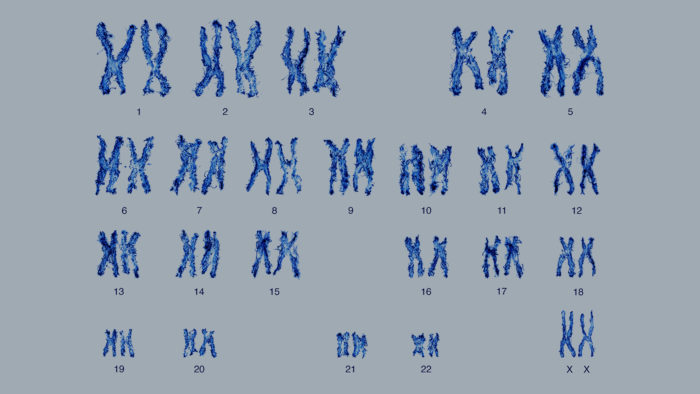 In evolutionary parlance, “conserved” means that some feature has remained relatively unchanged through some period or within a specific clade. Generally features will change over evolutionary time, either through direct selective pressures or genetic drift through random mutations. Therefore, in order for a biological feature to be conserved there must be selective pressure that keeps it from changing. The longer and more tightly that feature is conserved, the more fundamental it must be to biological function. Histones, for example, are proteins that help manage the long strings of DNA in cells – an extremely basic function for all life. Histones are also one of the most conserved proteins in all of biology.
It is therefore highly interesting that researchers recently found that chromosomal elements are highly conserved in virtually all animal groups over 600 million years – which is basically as long as animals have existed. Chromosomes are the organizing units of DNA. Humans, for example, have 23 pairs of chromosomes. Each chromosome contains a number of genes, and humans have about 20,000 functional genes.
Biologists have long known that sequences of genes tend to sort together – they always occur next to each other on the same chromosome, even across species. However, different clades have different numbers of chromosomes and different gene clusters on different chromosomes. Genes, it seems, get shuffled around during evolutionary history. Scientists and the University of Vienna and the University of California were working together to see if they could make more sense out of this chaos, and that’s what they did.
Continue Reading »
Aug
30
2021
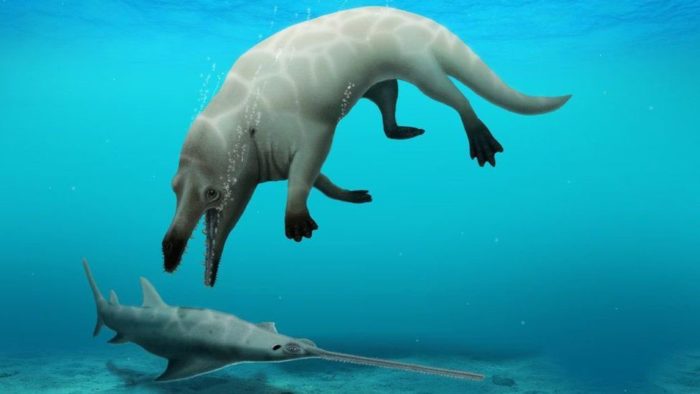 In 1985 Michael Denton, arguing against the fact of evolution, made the following observation:
“…to postulate a large number of entirely extinct hypothetical species starting from a small, relatively unspecialized land mammal and leading successively through an otter-like state, seal-like stage, sirenian-like stage and finally to a putative organism which could serve as the ancestor of the modern whales. Even from the hypothetical whale ancestor stage we need to postulate many hypothetical primitive whales to bridge the not inconsiderable gaps which separate the modern filter feeders (baleen whales) and the toothed whales.”
Denton (1985) Evolution: A Theory in Crisis, Adler & Adler Publishers:Chevy Chase, MD. p. 174
In 1992 creationist Duane Gish made an even more bold statement:
“The marine mammals abruptly appear in the fossil record as whales, dolphins, sea-cows, etc. There simply are no transitional forms in the fossil record between the marine mammals and their supposed land mammal ancestors.”
Duane Gish (1992), Evolution: The Challenge of the Fossil Record. Creation-Life Publishers: El Cajon, CA. p. 79
This remains a common strategy for creationists – point to current gaps in the fossil record and then pretend this is a problem for evolutionary theory. The unstated major premise here is that if evolution were true, we would by necessity already possess a fairly complete fossil record for the evolution of every single extant species, or at least (arbitrarily defined) major group. This premise is simply false. We have fossil windows into a process that occurred over 600 million years (if we talk only about multicellular creatures), all over the world, involving an estimated 5 billion species. There are gaps and always will be gaps.
Continue Reading »
Aug
26
2021
 The idea that all life on Earth is related through a nested hierarchy of branching evolution, occurring over billions of years through entirely natural processes, is one of the biggest ideas ever to emerge from human science. It did not just emerge whole cloth from the brain of Charles Darwin, it had been percolating in the scientific community for decades. Darwin, however, put it all together in one long compelling argument. Alfred Wallace independently came up with essentially the same conclusion, although did not develop it as far as Darwin.
On the Origin of Species was published in 1859, and it quickly won over the scientific community, with natural selection acting on variation becoming the dominant working hypothesis. But that, of course, was not the end of the story, only the beginning. If Darwin’s ideas were wrong, they would have slowly withered from lack of confirming evidence. But they were largely correct, even insightful. The last 162 years of research and observation have confirmed to an extraordinary degree the core ideas that life is related through branching connections, and that natural selection is a primary driving force of evolution. The theory has also evolved quite a bit, and is now a mature and complex scientific discipline sitting on top of mountains of evidence, including fossils, genetics, comparative anatomy, developmental biology, and direct observation. The basic fact of evolution could have been falsified thousands of times over, but it has survived every time – because it is essentially true.
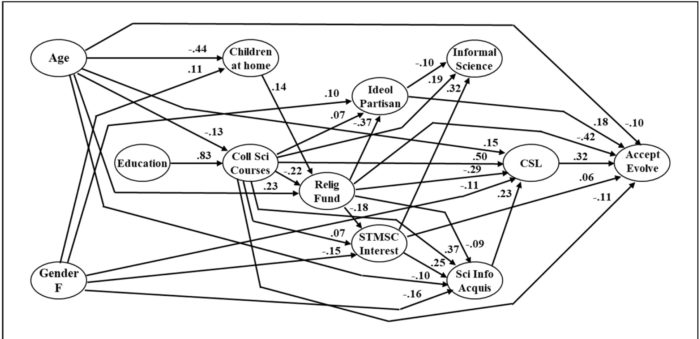
Acceptance of the basic tenets of evolutionary theory, therefore, is a good litmus test for any modern society. Of what, exactly, is another question, but certainly something is going wrong if the population does not accept this overwhelming scientific consensus. The US ranks second from the bottom (only Turkey is worse) in terms of accepting evolutionary theory. Researchers have been tracking the statistics for decades, and now some of the lead researchers in this field have published data from 1985 to 2020 (sorry it’s behind a paywall). There are some interesting details to pull from the numbers.
Continue Reading »
Jul
13
2021
 Regardless of whether or not you are a cat person or a dog person (I have both as pets, as well as a reptile, and have had birds and fish), there is no denying that dogs are excellent human companions. No other animal known is capable of the same relationship with people. Researchers have been trying to understand the origin of this special relationship, with some interesting results.
First let me review the results of a new study, and then add in some background. The question the researchers are trying to address is this – how much of dog behavior is shared with their wolf ancestors? Specifically, dogs and wolves share a common ancestor between 12,000 and 40,000 years ago. There was likely a lot of interbreeding during this time (as there still is) so it’s probably not possible to declare a clean break. But they are now distinct subpopulations. Dogs show an incredible ability to understand their human companions, even without extensive training. The question is – how much of this ability is innate vs trained and how much is shared with wolves?
The study compared 44 dog pups with 37 wolf pups right after birth. The wolf pups were raised by humans, with maximal human contact after just a few days from birth. The dog pups were kept with their litters with minimal human contact. They were assessed at 5-18 weeks old. The authors found that the dog pups were able to follow human direction (such as pointing and other cues) toward a food reward. The wolf pups did no better than chance, indicating no benefit from the human cues. Dog pups were also able to respond to novel cues, like playing a block next to the target bowl. Further, when a stranger was introduced the dog pups came up and interacted with them (wagging their tail and licking their face) while the wolf pups when into a corner and hid.
None of this is surprising, and it is all consistent with prior research. But it does help confirm that these stark differences are innate, and not learned. So what’s going on?
Continue Reading »
Jun
08
2021
 Evolution if one of the most fascinating scientific phenomena because it is so complex and operates over such varying and long timescales. It’s a real challenge to wrap one’s head around. There is therefore a tendency to settle on overly simplistic evolutionary narratives. This is not a criticism, we all do this in an attempt to grapple with evolutionary thinking. The challenge is to recognize this fact, and be open to a deeper, more complex and nuanced understanding of evolutionary processes. It’s a great example of what should be a general intellectual posture – recognize the limits of our current understanding (wherever that may be on the spectrum) and not only be open to, but seek out new information and concepts to keep incrementally pushing our understanding forward.
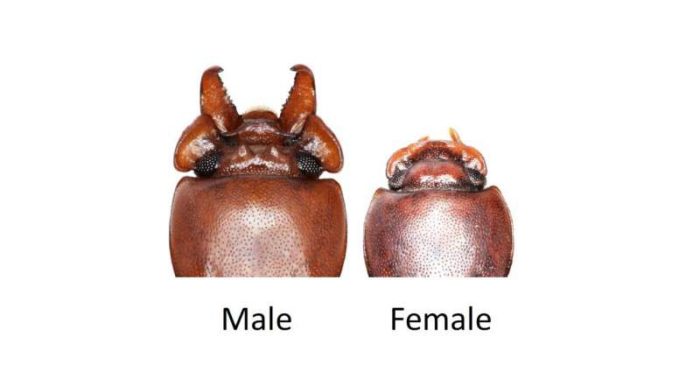
In that spirit, here is a study on the evolution of broad-horned flour-beetles that illustrates some of evolution’s complexity. The male broad-horned has exaggeratedly large mandibles, which is uses to compete with other males for mating access to females. This is an example of sexual selection, when a feature specifically increases mating success but is not necessarily broadly adaptable. The go-to example of this is the peacock’s tail feathers – a garish display meant to attract females, but an evolutionary burden in many other aspects. This sets up an evolutionary tug-of-war, where a feature may be advantageous in one respect but disadvantageous in another. Evolutionary processes are fairly efficient at balancing such conflicting forces.
As an aside, the balances tend to be only metastable. They can alter with changes in the environment or behavior. Even different individuals within a species can adopt different survival strategies that result in a different balance of traits. If a population within a species does this it may even eventually lead to a speciation event. For example, it has been documented that within some primate species dominant males will have access to females due to their alpha status, while others gain access by currying favor with the alpha, and still others gain access by gaining favor with the females and sneaking behind the alpha’s back. Still others may act as a “wing man” to a close kin, promoting their genes into the next generation by proxy. The lesson here is – no one strategy captures the wide diversity of behavior even within a single species.
Continue Reading »
Apr
29
2021
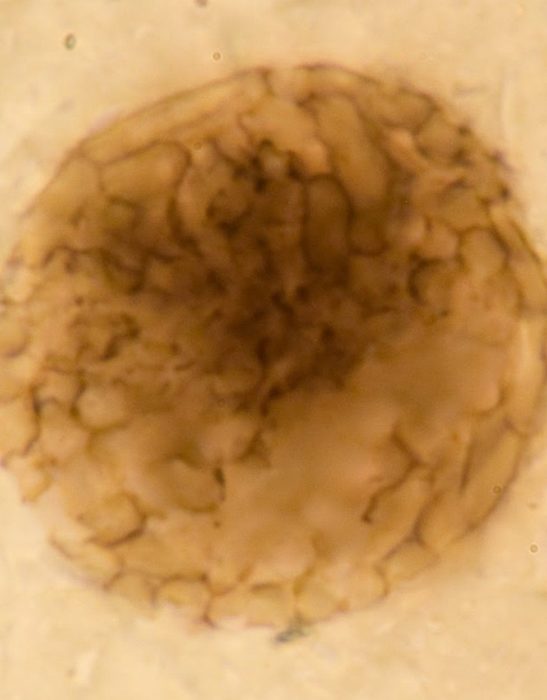 When studying the history of life evolutionary biologists and paleontologists have no choice but to look where the light is good. There are fossil windows into specific times and places in the past, and through these we glimpse a moment in biological history. We string these moments together to map out the past, but we know there are a lot of missing pieces.
One relatively dark passage in the history of life is the evolution of multicellularity. Beginning about 541 million years ago (mya) we can see the beginning of the Cambrian explosion – the appearance of a vast diversity of multicellular life. But this “explosion” was only partly due to rapid adaptive radiation, it is also an artifact of the evolution of hard parts that can fossilize. That development turned on the lights. The earliest known single-celled organisms are 3.77 billion years old, so we have a 3 billion year time span during which a lot must have happened. We know from changes in the atmosphere that cells evolved that could use sunlight to produce oxygen, and other critters evolved to eat them.
Continue Reading »